
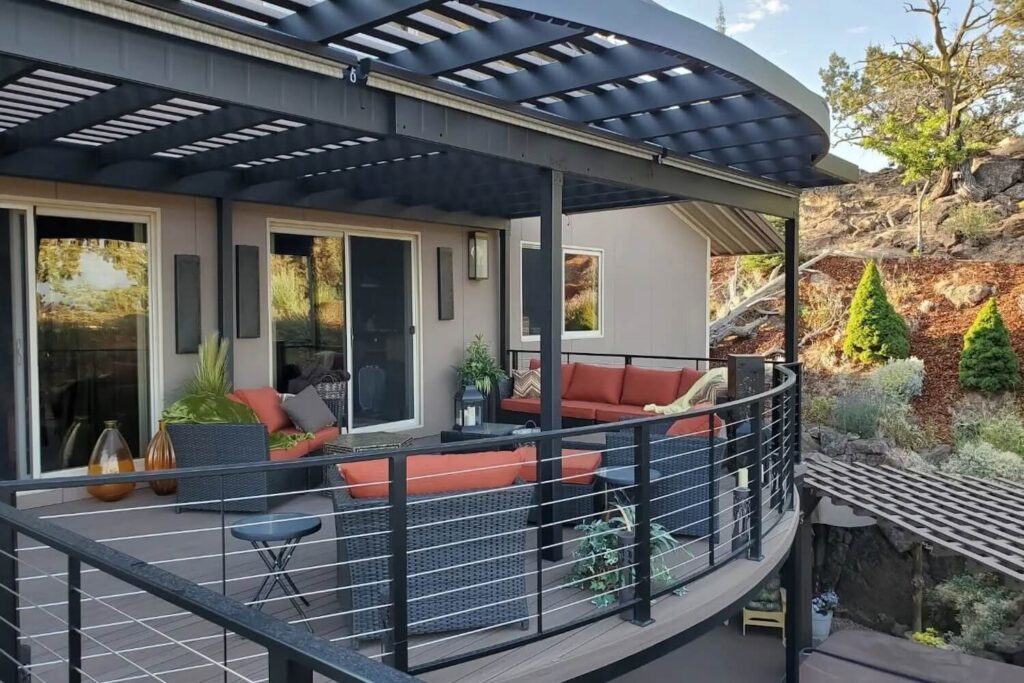
When homeowners invest in a custom outdoor deck, the initial excitement revolves around design choices: choosing board colors, planning outdoor kitchens, and imagining weekend barbecues with family and friends. However, alongside project estimates and material samples sits a stack of legal paperwork that deserves just as much attention as the visual design. Tucked inside that paperwork is the deck warranty, a document that promises long-term peace of mind, but often remains unread until something goes wrong.
A common misconception among homeowners is that a deck warranty is a single, blanket promise covering the entire structure against any future issue. In reality, a deck is an assembly of distinct components constructed by a contractor, and its protection comes in separate, independent layers issued by different parties. The two most critical layers are the manufacturer material warranty and the contractor workmanship warranty.
Understanding the distinction between what covers the boards and what covers the build is the single most valuable insight a homeowner can gain before signing a contract. When a deck sags, a railing wobbles, or a board cups, knowing which warranty applies and where the exclusions lie can mean the difference between a simple no-cost repair and an expensive out-of-pocket renovation.
Layer 1: The Manufacturer Material Coverage Warranty
The manufacturer material warranty is issued directly by the company that produces the decking boards, composite cladding, railing components, or structural fasteners. It covers physical and chemical defects in the product itself that occur under normal use and recommended environmental exposure.
What Material Warranties Typically Cover
For traditional pressure-treated lumber, material warranties are typically limited to protection against structural fungal decay and termite damage in ground-contact-rated timber. However, for advanced composite and wood-free materials, such as Deckorators SureStone mineral-based decking or TruNorth rice hull composite, material protection is far more extensive.
Manufacturer material warranties generally address two main categories of defects:
- Structural Product Defects: Coverage against manufacturing flaws that cause boards to split, check, delaminate, crack, or suffer internal structural breakdown. Premium mineral-based composite lines often carry 25-year to 50-year limited structural warranties.
- Stain and Fade Protection: Capped composite decking lines typically include a separate 25-year to 30-year stain and fade guarantee. This protects against excessive color loss caused by solar ultraviolet (UV) radiation and permanent staining from spilled food, beverages, or organic debris, provided the spill is cleaned according to manufacturer guidelines.
The Hidden Limitation: Material Only vs. Labor Costs
The most surprising fine print in a manufacturer’s warranty is the labor exclusion. If a composite board suffers a confirmed manufacturing defect in year eight, the manufacturer will typically ship replacement boards to your home or reimburse the prorated value of the boards, but they rarely pay for the labor required to tear out the defective boards and reinstall the new ones.
Demolition, fastener removal, waste disposal, and skilled installation labor often represent more than half the total cost of a deck repair. Unless the manufacturer offers an explicit labor allowance or the installer carries an extended workmanship warranty, the homeowner is left paying out-of-pocket for the labor to replace defective boards.
Common Material Warranty Exclusions
Manufacturer warranties are strict legal contracts that define exact operating parameters. Coverage is routinely denied for issues caused by external forces rather than manufacturing flaws. Standard material exclusions include:
- Improper Fastening or Spacing: Failing to maintain required expansion gaps between board ends or using unapproved hardware.
- Inadequate Substructure Ventilation: Boards installed over ground contact or unventilated spaces where trapped moisture causes heat and vapor buildup.
- Physical Abuse and Scratches: Scuffs from dragging heavy metal furniture, impact damage from fallen tree limbs, or gouges caused by sharp snow shovels.
- Chemical Damage: Surface etching or discoloration caused by harsh chemical solvents, pool chlorine, or unapproved cleaning agents.
Layer 2: The Contractor Workmanship Warranty
While the manufacturer protects the physical materials, the contractor workmanship warranty covers the installation, assembly, and structural framing performed by the deck builder.
What Workmanship Warranties Actually Cover
Even the highest-grade mineral composite board will flex, squeak, or fail if mounted on a poorly engineered frame. A contractor’s workmanship warranty guarantees that the deck was built in accordance with local building codes, structural engineering standards, and manufacturer installation specifications.
Workmanship insurance coverage directly addresses installation errors, including:
- Framing and Ledger Flashing Failures: Sagging joists, improper ledger board attachment to the home, or missing flashing that allows water to penetrate the rim joist.
- Fastener and Hardware Movement: Popped screws, loose joist hangers, or board warping resulting from improper fastening patterns.
- Railing and Stair Instability: Squeaky step risers, loose stair stringers, or wobbly guardrail posts that fail under lateral pressure.
- Foundation and Post Settling: Structural shifts or post movement caused by improper footing depth or poor post attachment.
Unlike material warranties, a workmanship warranty covers the expensive part of a repair: the labor, equipment, and crew hours required to fix installation defects.
Workmanship Timelines: Industry Benchmarks
Contractor workmanship warranties vary widely across the industry, typically falling into three tiers:
- Short-Term (1 Year): Standard among lower-bid or non-specialized general contractors. One year is often insufficient because structural framing movement, ledger flashing leaks, and board expansion issues usually take two to three freeze-thaw cycles to manifest.
- Extended (3 to 5 Years): Typical of established, specialized deck building firms. A 3-to-5-year term comfortably covers the initial settlement period where installation errors are most likely to surface.
- “Lifetime” Workmanship Claims: Often advertised by newer companies. In residential contracting, “lifetime” almost always means the duration of the original owner’s residency, not the lifetime of the house. Furthermore, a long warranty promise is only as reliable as the business behind it; if a contractor closes or rebrands after three years, their lifetime warranty instantly disappears.
The Crossover Gap: Why Deck Claims Get Denied
The most frustrating situation for a homeowner occurs in the “crossover gap”, a gray area where a material defect is blamed on an installation error, or an installation failure is dismissed as a material flaw.
When a composite deck board cups or buckles three years after installation, the homeowner naturally contacts the board manufacturer. A manufacturer inspector visits the site and discovers that the installer spaced the floor joists 24 inches apart instead of the required 16 inches, or failed to leave a 3/16-inch expansion gap at the board ends. The manufacturer denies the claim, citing improper installation. If the contractor’s workmanship warranty was only valid for 12 months, the homeowner is left stranded with zero coverage from either party.
Six Traps That Void Deck Coverage
Homeowners can avoid warranty denial by watching for six common pitfalls:
- Incorrect Substructure Framing: Installing composite boards over sagging, un-level, or wider-than-specified joist frameworks.
- Using Non-Approved Hardware: Fastening boards with non-compliant screws or clips that compromise board expansion.
- Ground-Contact Violations: Blocking airflow beneath composite boards or installing non-rated materials directly in damp topsoil.
- Failing to Register the Material Warranty: Many major manufacturers require homeowners to register their purchase online within 30 to 90 days of installation to activate full coverage.
- Unapproved Modifications: Adding heavy amenities, such as hot tubs, pergolas, or masonry outdoor kitchens, without re-engineering the load-bearing frame.
- Neglecting Basic Maintenance: Allowing wet leaf piles, mold, or standing water to sit on board surfaces for extended periods, which voids stain-and-fade coverage.
Side-by-Side Comparison: Decks Material vs. Decks Workmanship Warranty Coverage
To evaluate bids effectively, homeowners should review how both warranty types compare across key operational parameters:
| Warranty Dimension | Manufacturer Material Warranty | Contractor Workmanship Warranty |
|---|---|---|
| Primary Focus | Defective physical products, board delamination, UV fade & stain | Installation accuracy, structural framing, flashing, posts & railing stability |
| Typical Term | 25 to 50 Years (Often prorated after 10 years) | 1 to 5 Years (Covers initial settlement & freeze-thaw cycles) |
| What Is Included | Replacement boards or prorated product reimbursement | Repair labor, structural adjustments, hardware fixes & crew hours |
| What Is Excluded | Removal/reinstallation labor, improper installation, wear & tear | Material flaws, storm damage, owner neglect, normal wood checking |
| Claim Handler | Product manufacturer via technical representative | Deck building contractor directly |
Homeowners Warranty Transferability: Protecting Your Home’s Resale Value
A frequently overlooked feature in warranty paperwork is transferability. A transferable warranty allows the remaining coverage to pass from the original buyer to the next homeowner when the property is sold.
In competitive real estate markets, a deck backed by a valid, transferable warranty is a strong selling point. It reassures prospective buyers that the outdoor structure is built to last and eliminates inspection disputes over minor surface age.
However, transferability is rarely automatic. Manufacturers and builders typically enforce specific transfer rules:
- The transfer must occur within a strict window (often 30 to 60 days following real estate closing).
- A formal transfer application and small administrative fee may be required.
- Most warranties allow a one-time transfer only, expiring when the second owner sells the home.
The Integrated System Approach: How LeBlanc Decks Eliminates the Policies Crossover Gap
The most effective way to eliminate warranty disputes is to choose a builder who treats the foundation, framing, and surface boards as a single, fully engineered system.
Specializing in high-performance outdoor structures, LeBlanc Decks bridges the gap between material performance and installation quality by adhering to a strict, unyielding construction standard. By installing premium Deckorators Voyage mineral-based composite decking over manufacturer-stained Kiln-Dried After-Treatment (KDAT) lumber framing and anchoring the entire structure on mechanical pile footings that prevent wood-to-ground contact, they eliminate the root causes of framing movement and board failure.
When a project is constructed to this complete specification, known as a LeBlanc Deck System, it unlocks a comprehensive 3-Year Workmanship Warranty that is transferable once to a future homeowner. This labor protection complements Deckorators’ industry-leading 50-year structural and 25-year stain-and-fade manufacturer warranties, ensuring full coverage across both layers.
To maintain complete accountability, LeBlanc Decks provides every client with private access to an online customer portal. Homeowners can view project plans, access contract documents, and monitor daily progress through workday photo logs uploaded directly by the construction crew. If a warranty question ever arises years down the road, the entire documented history of the build remains accessible in one centralized digital hub.
Frequently Asked Questions (FAQ)
What is the primary difference between a material warranty and a workmanship warranty?
A material warranty is issued by the product manufacturer to cover physical defects in the decking boards or railings (such as cracking, splitting, or abnormal fading). A workmanship warranty is issued by the contractor to cover installation quality, structural framing, flashing, and assembly labor.
Does a 50-year composite decking warranty cover the labor to replace bad boards?
Usually no. Most manufacturer warranties cover only the cost of replacement materials or offer a prorated refund. The labor cost to remove failed boards and reinstall new ones falls on the homeowner unless the contractor’s workmanship warranty is still active or a specialized labor warranty applies.
What is the most common reason deck warranty claims are denied?
Improper installation is the single leading cause of claim denial. If boards are installed with improper joist spacing, inadequate expansion gaps, poor sub-frame ventilation, or non-approved fasteners, the manufacturer will deny the claim, citing installer error.
Is a contractor’s workmanship warranty transferable if I sell my house?
It depends on the contractor. Standard 1-year workmanship warranties rarely transfer. However, premium builders offer workmanship warranties that can be transferred once to a new buyer within a set timeframe, adding tangible resale value to the property.
Why do many contractors only offer a 1-year workmanship warranty?
Lower-bid or general contractors often offer 1-year warranties because structural movement, ledger flashing leaks, and board expansion issues typically take two to three freeze-thaw cycles to manifest. Specialized deck builders who use premium framing standards (such as KDAT lumber and mechanical footings) confidently offer 3-to-5-year workmanship terms.
Do I need to register my composite decking warranty after installation?
Yes. Many major composite decking manufacturers require homeowners or builders to register the installation online within 30 to 90 days of completion. Failing to register within the required window can reduce your coverage terms or void the warranty entirely.
Warranty Conclusion: Protect Your Investment from the Ground Up
A custom deck should provide decades of outdoor enjoyment, not unexpected repair bills. By taking the time to read the fine print, distinguishing between material and workmanship coverage, and avoiding common installation traps, you can ensure your investment remains fully protected.
When comparing contractor estimates, look beyond headline warranty numbers. Demand written documentation for both material and labor coverage, verify how warranty claims are handled, and choose a builder with a proven track record of structural excellence.
Partnering with an established specialist like LeBlanc Decks guarantees that your outdoor living space is engineered to the highest standard, from the mechanical footings to the final hidden fastener. Backed by robust 3-year transferable workmanship warranties and up to 50-year manufacturer coverage, you can step out onto your new deck with total confidence. Contact us today to schedule your design consultation, take advantage of current seasonal build offers, and build an outdoor sanctuary that stands the test of time.