
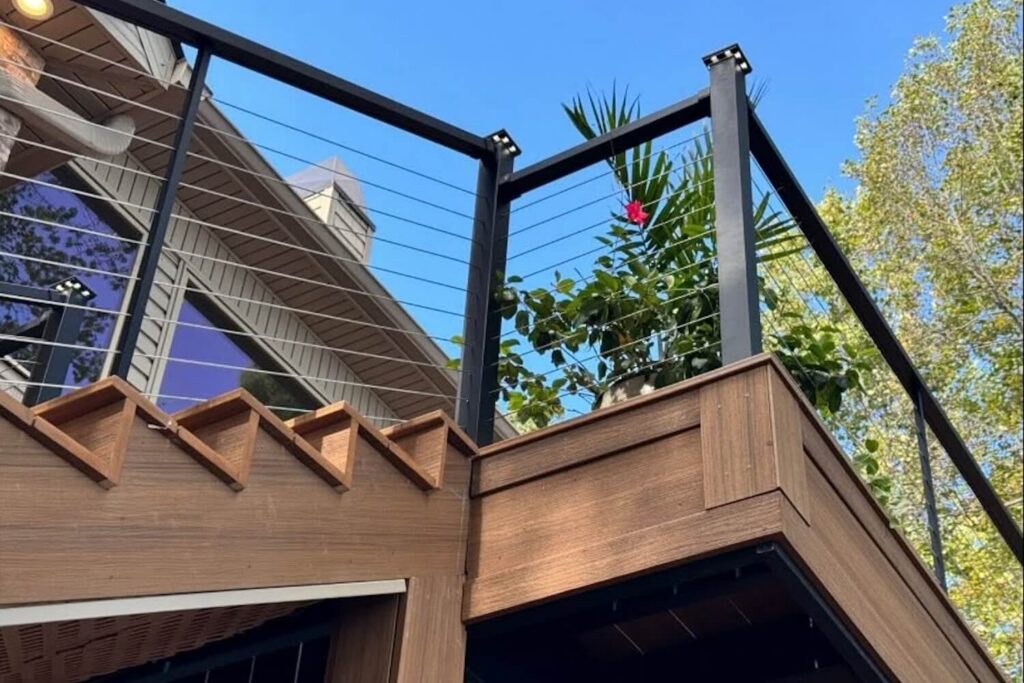
The elevated outdoor deck is where indoor comfort meets the beauty of nature. Whether your backyard opens up to rolling green hills, a serene lakefront, a lush forest canopy, or a sparkling swimming pool, your view is often the primary reason you invested in outdoor living in the first place. However, when standing or sitting on your deck, one single architectural element sits directly in your primary line of sight: the deck railing system.
Traditionally, deck railings were treated strictly as safety barriers enforced by local building codes. Constructed from heavy 4×4 wooden posts and thick vertical balusters, older railing designs frequently felt like wooden cages. They boxed in the patio, cast dark shadows across interior rooms, and sliced expansive outdoor landscapes into narrow vertical strips.
Modern outdoor architecture takes an entirely different approach. Today, a railing system is viewed as a deliberate design frame, an opportunity to enhance your home’s curb appeal while tailoring your connection to the landscape. Homeowners designing a new deck or upgrading an aging platform are primarily presented with three premier infill options: stainless steel cable, tempered glass, and aluminum pickets. Each material offers distinct advantages in visibility, wind protection, maintenance, and architectural style. Choosing the right option requires balancing your practical lifestyle needs with your vision for the ultimate backyard view.
Stainless Steel Cable Railings: Minimalist Engineering and Unbroken Horizons
For homeowners seeking a sleek, modern aesthetic that preserves sweeping horizontal views, stainless steel cable railing systems have become one of the most sought-after architectural features.
The Visual Science of Cable Infill
Cable railing systems utilize thin, high-tensile strands of marine-grade 316 stainless steel running horizontally between slim vertical posts. Because the cables are remarkably thin, typically 1/8 to 3/16 of an inch in diameter, they create an optical effect where the infill virtually disappears against outdoor backgrounds. When looking out across a yard from a seated or standing position, the thin horizontal lines melt into the natural landscape, offering virtually unbroken sightlines.
Unrestricted Airflow and Modern Style
Unlike solid wall structures, cable railings allow natural breezes to flow freely across your deck surface. This open circulation is a major benefit during hot summer afternoons, preventing heat from pooling on your patio. Aesthetically, cable railings introduce a crisp, modern, and industrial-chic look that pairs exceptionally well with dark composite decking, contemporary home siding, and urban or mountain architecture.
Structural Tension Requirements
It is important to understand that cable railings operate under immense mechanical stress. To meet safety codes and prevent cables from spreading apart when pushed, each cable strand must be pulled to precise tension. This places substantial lateral tension on the end posts. A high-performance cable installation requires heavy-duty aluminum or steel corner posts, specialized tensioning hardware, and rigid sub-framing to ensure the cables remain taut and safe for decades without sagging.
Tempered Glass Railings: Complete Transparency and Weather Protection
If your primary goal is 100% unobstructed panoramic visibility, tempered glass railing systems represent the pinnacle of outdoor luxury.
Total Visual Transparency
Glass railings eliminate all visual barriers between your deck and the surrounding scenery. By replacing traditional pickets with thick panels of crystal-clear tempered safety glass, there are no vertical or horizontal lines to interrupt your gaze. Whether watching children swim in a lower-level pool, admiring lakefront ripples, or taking in mountain horizons, glass delivers a seamless, crystal-clear view that makes your outdoor room feel infinitely larger.
The Dual Advantage: Windbreak and Sound Dampening
Beyond its striking appearance, glass offers functional weather benefits that metal pickets and cables cannot match. Solid glass panels act as a powerful windbreak, shielding your seating area from harsh, chilling gusts. On elevated decks, hilltop properties, or waterfront homes where prevailing winds can make outdoor dining uncomfortable, a glass railing creates a warm micro-climate, trapping ambient warmth and extending your patio usability into early spring and late autumn. Additionally, solid glass panels provide a degree of sound dampening, reducing noise from nearby roads, motorboats, or active pool zones.
Maintenance and Design Variations
Homeowners considering glass often ask about upkeep. While modern tempered glass is treated to resist scratching and structural impact, it does require occasional washing with window cleaner or a soap-and-water squeegee to remove rainwater spots, pollen, and fingerprints.
Glass systems are available in two primary configurations:
- Framed Glass Systems: Glass panels sit securely within durable aluminum top and bottom rails, offering exceptional structural rigidity and a defined architectural border.
- Frameless Glass Systems: Heavy-gauge glass panels are anchored at the base using heavy-duty stainless steel spigots or clamps, leaving the top edge completely open for an ultra-minimalist, high-end look.
Aluminum Picket Systems: Classic Elegance Meets Low-Maintenance Durability
While cable and glass lean modern, traditional vertical pickets (balusters) remain a classic choice for many architectural styles. However, modern aluminum picket systems are a far cry from the bulky wooden railings of the past.
Slim Profiles and Enhanced Sightlines
Old-fashioned wooden railings utilized wide 2×2 spruce or pine balusters spaced closely together, creating a heavy visual screen. Modern metal railing systems utilize high-strength, slender aluminum pickets, often square or round profiles measuring under an inch wide. Because modern aluminum pickets are substantially narrower than wood while offering superior strength, they dramatically increase the visible open space between posts, providing surprisingly clear views while maintaining a classic look.
Versatility and Cost Efficiency
Powder-coated aluminum pickets offer unmatched versatility, blending seamlessly with traditional, craftsman, colonial, and rustic home designs. They represent the most cost-effective upfront material investment among high-performance metal railing options, delivering high durability without the higher price tag associated with custom glass panels or specialized cable fittings.
Zero Painting or Staining Required
Unlike wooden pickets that split, rot, warp, and require tedious hand-painting or staining every few years, aluminum pickets are finished with a baked-on powder coating. This protective finish resists UV fading, scratching, chipping, and corrosion. An occasional rinse with a garden hose is all that is needed to keep the system looking fresh for decades.
Comparative Decision Matrix: Evaluating Your Priorities
To help determine which custom deck railing infill aligns best with your outdoor lifestyle, consider how each material performs across key design categories:
| Performance Category | Stainless Steel Cable | Tempered Glass Panels | Powder-Coated Aluminum Pickets |
|---|---|---|---|
| Primary Sightline Preservation | Excellent (Slim horizontal lines melt into background) | Superior (100% unobstructed, zero visual lines) | Good (Slim vertical lines provide clean framing) |
| Wind & Weather Protection | Open (Allows maximum airflow and breezes) | Shielded (Acts as a solid protective windbreak) | Open (Allows natural airflow across deck) |
| Maintenance Demands | Very Low (Occasional tension check & rinse) | Moderate (Requires periodic glass cleaning) | Extremely Low (Simple soap-and-water rinse) |
| Architectural Style Match | Modern, Industrial, Contemporary, Lakefront | Ultra-Modern, Luxury, Waterfront, High-Rise | Traditional, Craftsman, Farmhouse, Classic |
| Relative Upfront Investment | Mid-to-High (Specialized tensioning hardware) | High (Heavy tempered glass & structural mounts) | Budget-Friendly to Mid (Cost-effective material) |
The Structural Foundation: Why Engineering Matters Most
Regardless of whether you choose cable, glass, or aluminum pickets, a railing system is only as reliable as the structural deck framing that anchors it to your deck. Building safety codes mandate that guardrails must withstand a concentrated force of at least 200 pounds applied in any direction along the top rail.
Achieving this level of unshakeable safety requires a deep understanding of structural framing:
- Solid Blocking and Post Attachment: Railing posts cannot simply be surface-crewed into thin deck boards. Posts must be thru-bolted directly into heavy, structural joist blocking beneath the deck surface using heavy-duty stainless steel hardware.
- Kiln-Dried After-Treatment (KDAT) Framing: If structural wood framing underneath your deck warps or twists as it dries out, post mounts will loosen, causing the entire railing system to wobble. Utilizing #1 grade KDAT lumber or structural steel framing ensures the foundation remains flat, rigid, and stable over time.
- Code-Compliant Baluster Spacing: Safety regulations require that railing infill openings must be small enough to prevent a 4-inch sphere from passing through at any point. This prevents children and pets from slipping through the railing.
This is precisely where partnering with a specialized contractor like LeBlanc Decks makes a critical difference. Recognizing that safety and structural engineering must be integrated into a deck from day one, their team designs custom framing structures backed by mechanical pile footings and precision post attachments to ensure your railing system remains rock-solid for a lifetime.
Frequently Asked Questions (FAQ)
Which deck railing option provides the best visibility when sitting down in patio furniture?
Tempered glass panels provide the absolute best visibility from a seated position, offering 100% unobstructed views with zero lines. Stainless steel cable railings are a close second, as their ultra-thin horizontal strands fall naturally out of focus, allowing your eye to look right through them.
Do cable deck railings sag over time, and how do you tighten them?
High-quality marine-grade stainless steel cables experience minimal stretching. However, if minor slack develops after years of heavy use, custom cable systems feature hidden, mechanical turnbuckles or tensioning fittings built directly inside the end posts. Tightening a loose cable requires only a simple turn of a hex wrench or tensioning tool to restore factory tautness.
How often do glass deck railings need to be cleaned?
Maintenance depends on your local environment. In typical suburban settings, glass railings only need cleaning every few months, or whenever you clean your home’s exterior windows. Decks located near salt water, dusty roads, or heavy tree pollen may require more frequent rinsing with a soft squeegee and water to maintain crystal clarity.
Are cable deck railings safe for households with young children and pets?
Yes, provided they are properly engineered and installed. Code-compliant cable systems space horizontal cables no more than 3 inches apart and maintain high tension so that the cables cannot be manually forced apart to exceed a 4-inch gap. This prevents children or pets from slipping through the opening.
Can I mix different railing infill options on the same deck layout?
Absolutely! Mixing infill types is a popular design trend. For example, many homeowners install crystal-clear glass panels along the rear of their deck to preserve a primary water or mountain view, while using cost-effective aluminum pickets or cable rails along the sides for privacy and budget balance.
Do glass railings break easily in severe weather or hail storms?
No. Outdoor glass railing systems utilize heavy-duty tempered safety glass, often 1/4 inch to 1/2 inch thick, that is heat-treated to be several times stronger than standard window glass. It is engineered to withstand heavy wind loads, flying debris, hail, and direct physical impacts without shattering.
Conclusion: Frame Your Ultimate Outdoor View
Your deck railing should never be a visual barrier that restricts your enjoyment of the outdoors. By carefully considering the unique advantages of stainless steel cable, tempered glass, and aluminum pickets, you can choose a system that frames your view, complements your home’s architecture, and matches your maintenance preferences.
Whether you desire the unbroken horizons of cable, the wind-shielded luxury of glass, or the timeless elegance of powder-coated pickets, bringing your vision to life requires unshakeable craftsmanship. The team at LeBlanc Decks brings over two decades of specialized deck-building experience to every project across East Tennessee. From structural framing engineered to exceed safety codes to seamless, transparent customer communication via a private online project portal, they deliver outdoor sanctuaries built to perform for generations..